Looking back, I totally wasted my 20s.
I had no one in my early 20s speaking anything positive or beneficial into my life. When people say choose your friends wisely, they’re not lying.
I worked in a restaurant for a few years alongside a part-time gig at a radio station. Then I got married and “stepped up” into a data entry role at LabCorp, entering data via a number pad.
After that, I moved into a transcription department and stayed there for about 10 years.
10 years!!
The Hidden Problem With “Just Having a Job”
The problem with this approach to life is that if you’re ever faced with the unfortunate circumstance of being laid off, you quickly realize something terrifying:
You are left void of any skillset to move forward.
If you’re in a job that isn’t specialized, a job that almost anyone could do, and you stay there too long, even if you move up the ladder, when your days are over there… you have nowhere to go.
You don’t have a specific skillset.
You don’t have a clear next step.
And you don’t have leverage.
I didn’t go to school for anything particular. I worked jobs that could replace me easily. And when they announced that they were laying off my entire department, aside from my boss and me, I knew my days were soon to be numbered.
The Person Who Saw It Before I Did
In all of this, my wife was my biggest asset.
She kept telling me:
“You’re fixing everyone’s computers at work.
You spend all your time on computers at home.
Why don’t you do some training in computers or programming?”
She said this multiple times over the years.
But I worked around very unambitious people eight hours a day, and I honestly thought it was impossible.
Looking back, she was right all along, but that’s another story.
The Shift That Changed Everything
But something happened in the last years of that job.
I started reading.
I started studying.
I learned to write code.
I got into software development.
That whole story exists in detail in another video I put out, so I won’t repeat it here.
But the real turning point, the moment my mindset fully changed, came from a simple diagram I stumbled across. A diagram that radically reframed how I thought about work, money, and calling.
To this day, when I talk to people in a similar situation — especially those in their early 20s who have no clue what to do with their lives — I point them to this diagram.
I originally came across it years ago in a post by Michael Hyatt. I don’t think the blog post exists anymore, but the diagram does.
You may have seen it before.
But I don’t think most people have really investigated all the questions it answers.
So let me explain it.
The Three Components of a Calling
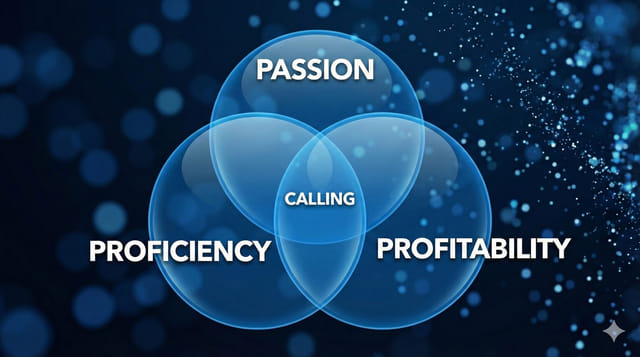
There are three key elements that determine your vocational calling.
All three must be present.
If even one is missing, you’ll end up in one of three places:
- Hating your job
- Being broke
- Or constantly in and out of work
1. Passion
Everyone has something they’re passionate about.
Computers.
Business.
Finance.
Building things.
Debating.
Caring for people.
Every person has activities that fire them up, things that excite them and make them tick.
But passion alone doesn’t pay.
If I’m passionate about collecting baseball cards, that’s great, but it probably won’t lead to a sustainable career. On the flip side, if you aren’t passionate about what you do, over time you’ll begin to hate it.
It might pay well. You might even be good at it. But if you hate what you do every single day, what good is the job?
2. Proficiency
What are you good at?
My wife kept telling me I was good at computers. I was also passionate about them. (Hint.)
But that’s not always the case.
Many people are good at things they hate doing. You know the feeling — people keep coming to you because you’re good at it, and every time you think:
“Ugh… again?”
There’s an auto mechanic near me who’s great at what he does, but he complains nonstop. Every visit is just negativity and dread.
On the other hand, if you’re passionate about something but not good at it, you won’t succeed either.
3. Profitability
This is where it all comes together.
Is the career profitable?
If you’re passionate about baseball cards and highly knowledgeable about them, but you can’t make money doing it, that’s not a career.
That’s a hobby.
If you have a passion for helping people, you’re proficient because you went to nursing school and passed with flying colors, and the field is in demand — that checks all three boxes.
✅ Passion.
✅ Proficiency.
✅ Profitability.
What Happens When One Is Missing
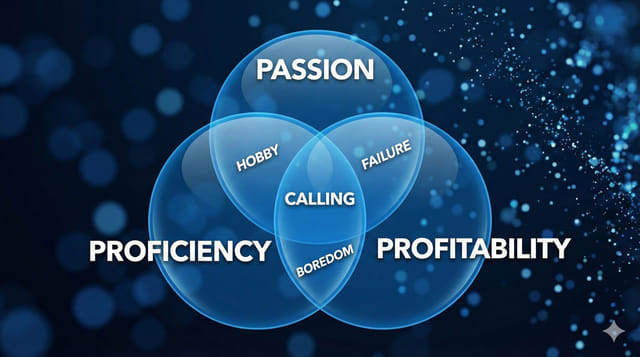
If any of these three elements are missing, the calling doesn’t work.
See the overlays in the above diagram?
- Passion + Proficiency, but no Profitability → You’ll be poor
- Passion + Profitability, but no Proficiency → You’ll be fired (and poor)
- Proficiency + Profitability, but no Passion → You’ll be miserable
Yes, we all work jobs we hate sometimes to pay the bills. That’s life. Being productive, honest, and hardworking matters.
But eventually, you want to reach the intersection where:
- You love what you do
- You’re good at it
- And it’s in demand
That intersection is your calling.
How to Apply This to Your Life
Ask yourself three questions:
What are you good at?
Ask people. Often it’s obvious to everyone but you.What do you love doing?
What excites you? What do you lose track of time doing?What’s profitable?
Cross off anything that doesn’t have real demand.
For me, it was simple in hindsight:
- I loved computers
- I was good at computers (going all the way back to high school)
- Software development is a profitable, in-demand career
That’s how I landed where I am today.
This Diagram Goes Beyond Careers
This framework can save you from massive mistakes.
Think about college degrees.
You love theater.
You’re good at it.
You graduate with debt… and no job market.
That’s a hobby.
The same applies to many degrees: art, fashion, photography, tourism. You may love them and be talented, but the market doesn’t care.
Just following this diagram can save you years of debt and regret.
So Where Are You?
Where are you in this diagram right now?
Have you found the intersection of passion, proficiency, and profitability?
If you have, then full steam ahead.
If not, now you know exactly what to work toward.
I’d love to hear your thoughts below.
This page may contain affiliate links. Please see my affiliate disclaimer for more info.