Rust has become one of the most popular programming languages for systems programming, web development, and more. If you’re still on the fence about learning it, I laid out my reasons why Rust is worth mastering.
That being said, it’s not really on the “easy list” of languages to master.
With all the materials out there, here’s my curated list of the top 5 Rust books that will help you master the language and its ecosystem.
1. The Rust Programming Language (“The Book”)
Often referred to as “The Book,” this is THE definitive guide to learning Rust.
And it’s FREE (though there is a print version as well; the 3rd edition covers the Rust 2024 edition and adds a full chapter on async programming).
Written by Steve Klabnik, Carol Nichols, and Chris Krycho, with contributions from the Rust community, it’s the perfect starting point for anyone new to the language.
In fact, 9/10 seasoned Rust developers would tell you to start here and study this book well. I would also recommend you do the same, twice!
This comprehensive guide covers everything from basic syntax to advanced concepts like ownership, borrowing, and lifetimes. The clear explanations and well-crafted examples make it an invaluable resource for beginners and experienced programmers alike.
What sets this book apart is its focus on Rust’s unique features and idiomatic programming style. It not only teaches you how to write Rust code but also how to think in Rust, which is crucial for mastering the language.
Rust is not an easy language to master. Therefore, there is no better approach than learning the particulars from those who have mastered it.
And there is a more “interactive” version out there of the Rust Book that includes quizzes, highlighting, and visualizations as well. That version is here. It’s the exact same material, but with added resources to help you learn and remember.
2. Rust for Rustaceans
Once you’ve grasped the basics, “Rust for Rustaceans” by Jon Gjengset is a logical next step as recommended by many others as your second Rust book.
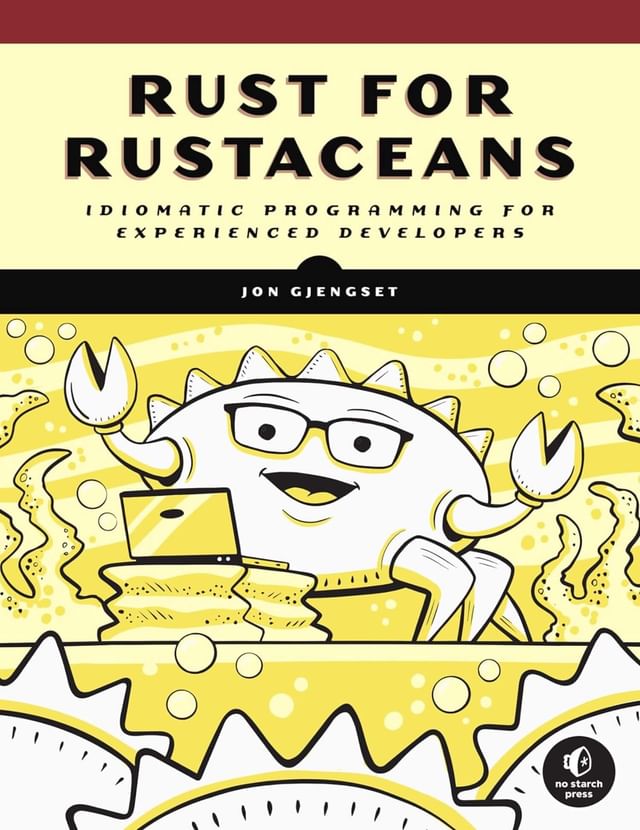
This book dives deep into Rust’s advanced features and idiomatic programming practices, making it an essential read for intermediate to advanced Rust developers.
Gjengset’s clear writing style and in-depth explanations help demystify complex topics like asynchronous programming, unsafe Rust, and advanced trait usage (traits are tricky).
The book also covers important aspects of the Rust ecosystem, including tooling and common libraries.
What makes this book stand out is its focus on writing production-quality Rust code. It goes beyond just teaching language features to show you how to design robust, efficient, and maintainable Rust programs.
Many out there can build hobby apps in Rust, but few have actually pushed and maintained Rust apps in production.
3. Programming Rust
For those who prefer a more comprehensive approach, “Programming Rust” by Jim Blandy, Jason Orendorff, and Leonora F.S. Tindall is an excellent choice.
This book offers a thorough exploration of Rust, from basic concepts to advanced topics.
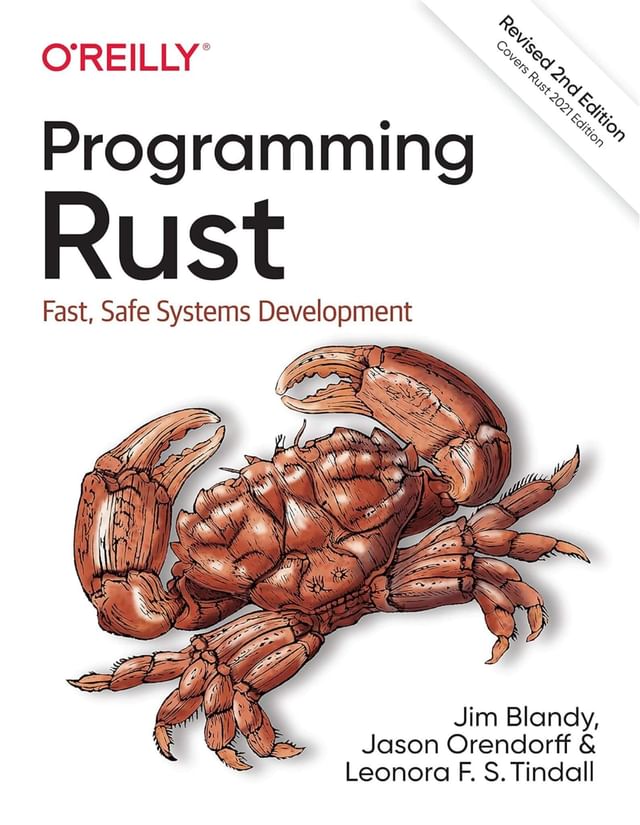
What sets “Programming Rust” apart as a great Rust book is its depth and breadth. It covers not just the language itself, but also delves into the philosophy behind Rust’s design decisions. The book includes detailed explanations of Rust’s memory model, concurrency features, and how to interface Rust with C code.
The authors’ expertise shines through in their clear explanations and practical examples.
This Rust book is particularly valuable for programmers coming from other languages, as it often draws comparisons to help readers understand Rust’s unique features.
One heads-up before you buy: a 3rd edition, updated for the Rust 2024 edition, is scheduled for print in December 2026 (it’s already readable in early access on O’Reilly). If you’re not in a hurry, it may be worth the wait.
4. Rust in Action
If you’re the type of learner who enjoys a more hands-on, project-based approach (I think many of us fall in this category), “Rust in Action” by Tim McNamara is the book for you.
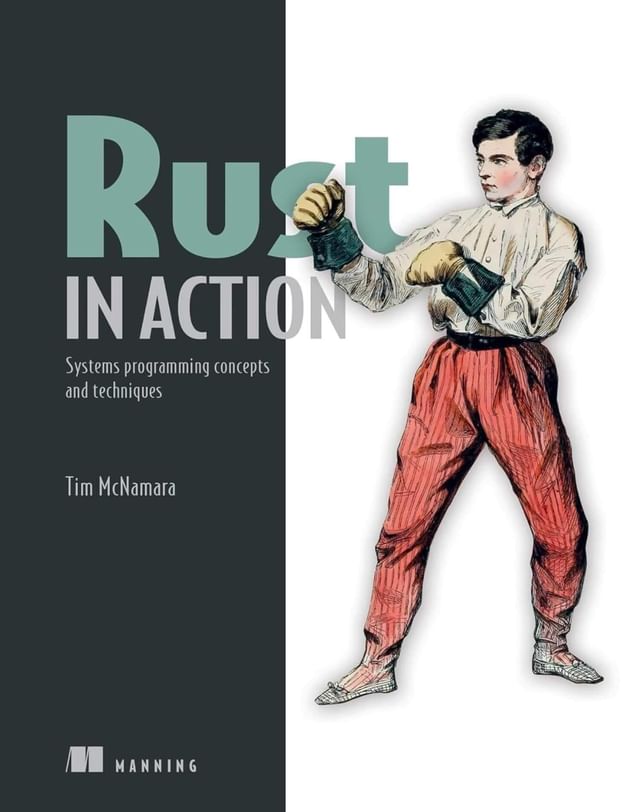
This book teaches Rust through the lens of systems programming, making it an excellent choice for those interested in low-level programming.
What makes this Rust book unique is its focus on practical projects.
You’ll build a variety of interesting applications, including a CPU emulator and a basic operating system. These projects not only teach you Rust but also give you insights into how computers work at a fundamental level. All programmers, newb and seasoned, can benefit from these fundamentals.
McNamara’s writing style is engaging and clear, making complex topics accessible.
The book also covers important Rust concepts in the context of real-world scenarios, helping you understand when and how to apply different language features.
5. Zero To Production In Rust
Okay, this is the hidden gem that many have overlooked. For those interested in web development with Rust, “Zero To Production In Rust” by Luca Palmieri is an absolute must-read.
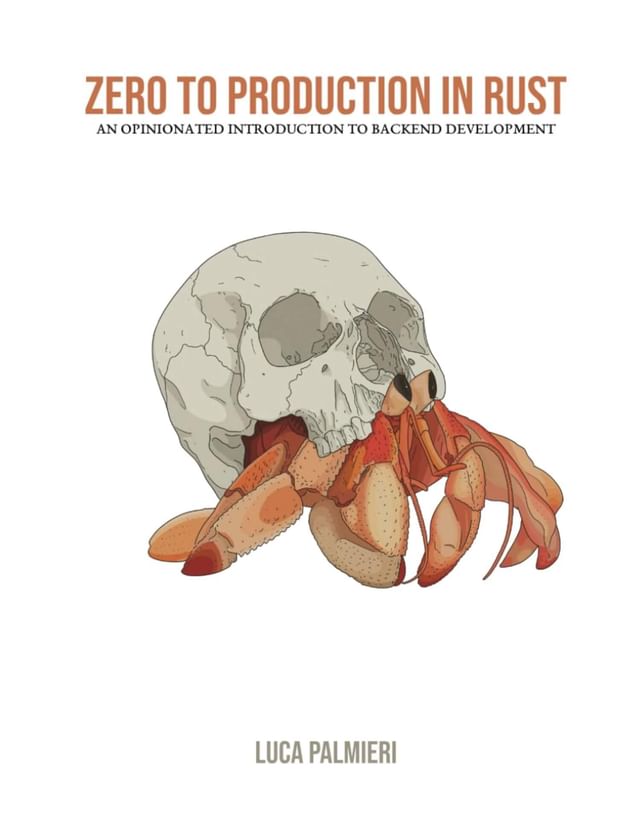
This book takes you through the process of building a production-ready web application from scratch using Rust.
And what sets this book apart is its practical, end-to-end approach. It covers not just Rust syntax and web frameworks, but also important aspects of production systems like testing, logging, and deployment. The book uses popular Rust libraries and tools, giving you experience with the broader Rust ecosystem.
Palmieri’s focus on best practices and real-world considerations makes this book invaluable for anyone looking to use Rust in a professional setting. By the end of the book, you’ll have a solid understanding of how to build and maintain production-quality web services in Rust.
Bonus: 2 More Books Worth Your Shelf Space
These two didn’t make the top 5, but both have earned a strong reputation in the Rust community and fill gaps the books above don’t cover.
Rust Atomics and Locks
“Rust Atomics and Locks” by Mara Bos, who leads the Rust standard library team, is THE book on low-level concurrency in Rust: atomics, memory ordering, mutexes, and how to build your own synchronization primitives.
It’s a focused read (around 250 pages), and once the borrow checker stops fighting you, this is the book that takes your understanding of concurrent Rust from “it compiles” to “I know why it works.”
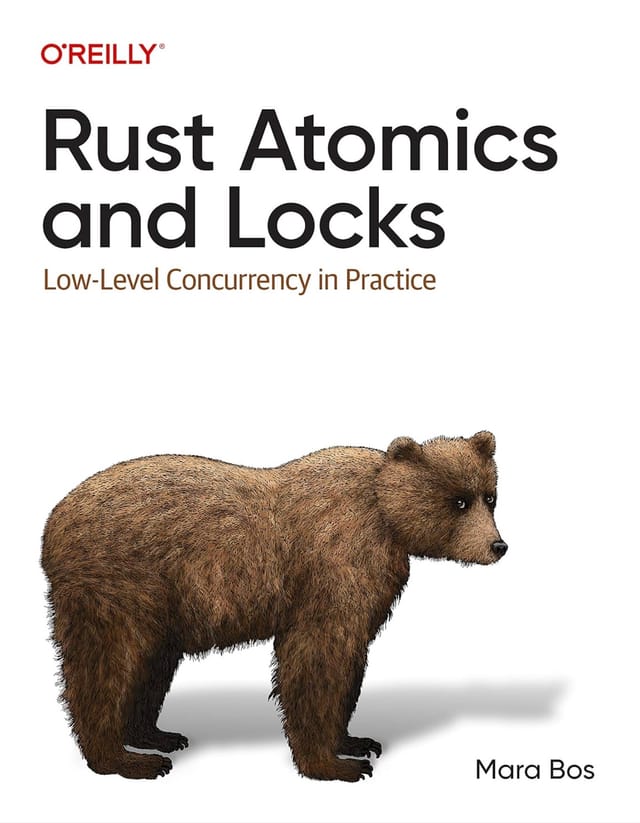
Like The Book, you can read it free online.
Effective Rust
“Effective Rust” by David Drysdale follows the classic “Effective C++” format: 35 specific, self-contained ways to improve your Rust code, covering types, traits, error handling, and the ecosystem’s tooling.
It works best as a second or third book, once you know the syntax and want your code to read like idiomatic Rust instead of translated C++ or Python.
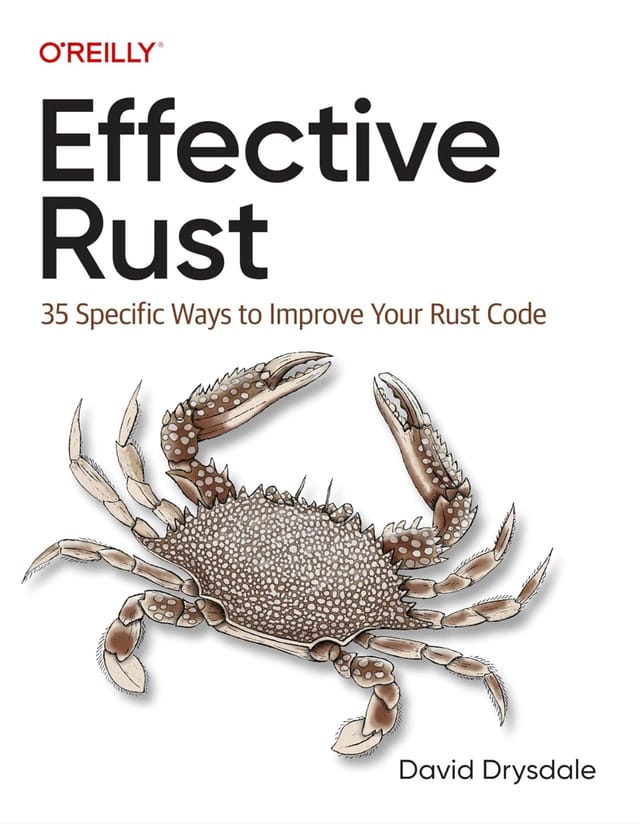
This one is also free to read online.
Conclusion
Each of these books offers a unique perspective on Rust, catering to different learning styles and interests. Whether you’re a beginner just starting out or an experienced developer looking to deepen your Rust knowledge, these books will provide you with the insights and skills you need to master Rust and its ecosystem.
And if books aren’t your primary way to learn, check out my number one resource for learning Rust.
This page may contain affiliate links. Please see my affiliate disclaimer for more info.